Lessons learned from the FirstNet® Health and Wellness Coalition
There is a mental health crisis facing our nation’s first responder community. The rates of PTSD, depression and anxiety among public safety personnel far exceed the rates of the general population. By its very nature, emergency response is stressful. This is the norm. And there are very real mental health impacts to those who serve our communities.
For public safety, few things are more important than the lives of first responders and the people they serve day in, and day out. These are the men and women who run toward emergencies. And we understand the service first responders provide our communities comes with personal sacrifice. That’s why FirstNet established a Health and Wellness program in May 2020 to address the wellness problems facing public safety.
A key component of this commitment is establishing the FirstNet Health & Wellness Coalition. The Coalition is integrating responder, community, industry and academic capabilities to support the holistic health, wellness and readiness of America’s first responders. The Coalition serves as the backbone to everything we do to support the health and well-being of first responders. And along the way, we’ve learned a thing or two together.
Working together
Chief Norvin Collins, board member with the International Association of Fire Chiefs, eloquently stated, “to make change, public safety needs to come together at the kitchen table. Great things happen at the kitchen table, and together, we can be a powerful force for wellness among first responders.”
And that’s what the FirstNet Health and Wellness Coalition does. We come together to assess the data on first responder health and wellness; identify priorities through a comprehensive needs assessment and focus those priorities into strategic lines of effort and share best practices and lessons learned.
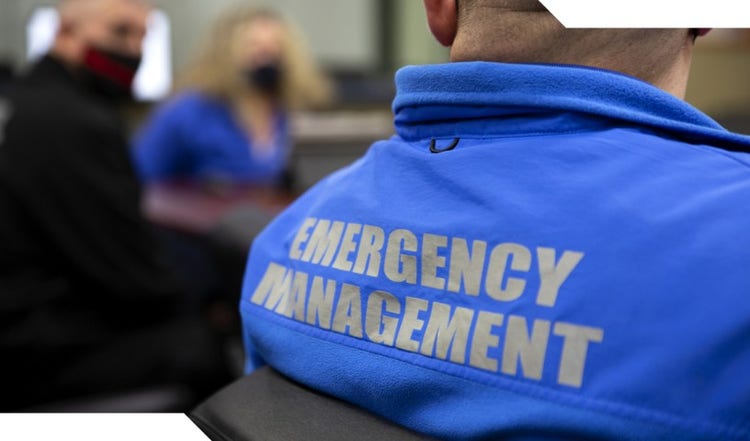
Along the way, I’ve learned that leadership at all levels of public safety organizations share my passion for health and wellness. It’s not just me. Chiefs and leaders across law enforcement, fire, EMS, dispatch, corrections, emergency management, and healthcare are passionate about taking action and creating systems for change. Together, we’ve identified that leadership matters. Responders have stated they want to see leadership engaged in wellness efforts, not just talk about it.1
We’ve heard from family members and we know they want to be involved in the discussion too. Often, family members are the first to see signs of deterioration in their responder. And they aren’t sure where to turn or whether the department will support them.
Robyn Mikel lost her husband to suicide. She challenged the coalition to take action by asking, “What are you afraid of?”
We’ve learned that stigma is a real thing. And we’ve started having those hard conversations about suicide, depression, post-traumatic stress, access to health care, and others, because we learned that to make change, we have to be the first ones to talk about the problems facing public safety.
Celebrating the wins
And, we’ve learned to celebrate the wins. Responders want to be involved in their health and wellness. They want to have these conversations too. They care about their physical health as much as their mental health. And they like to see opportunities for wellness in their local departments, as well as in their surrounding communities and digital worlds. I believe the culture is changing. We have a lot of work to do. But we’re headed in the right direction. In health promotion, the first step towards change is acknowledging the problems that are there.
Finally, we’ve learned there are some AWESOME organizations out there doing real work in supporting responders. And FirstNet has committed to supporting their efforts. Here’s a quick snapshot of some of those actions we’re taking to effect change:
- In June 2021, we launched the FirstNet ROG the Dog program through a partnership with Global Medical Response. The animal-assisted therapy program consists of a group of trained Labradoodles that specialize in helping first responders on the front lines. The program is affectionately named after the FirstNet Response Operations Group (ROG) – a team led by former first responders that guides deployment of the FirstNet fleet of dedicated network assets.
- In September 2021, we collaborated with The Quell Foundation, which provides resources to help first responders struggling with mental health, to help produce their documentary on mental health in public safety: “Lift the Mask: First Responders Sound the Alarm.”
- We collaborated with Boulder Crest Institute and its first responder initiative in Miami, Florida, and Tucson, Arizona, to develop and deliver transformative post-traumatic growth-based training programs to enhance the well-being of first responders.
- FirstNet supports O2X Human Performance to bring health, wellness and resilience training workshops to first responders in 5 cities across Florida, Colorado, Minnesota, Arizona and Ohio.
- We’re supporting Blue H.E.L.P. and First H.E.L.P., an organization committed to addressing suicide prevention in public safety and supporting the families of first responders who lost their lives to suicide.
- The National Association of Emergency Medical Technicians has been a key member of the FirstNet Health and Wellness Coalition as an advocate for mental health and wellness in emergency response professionals. We’ve supported the development of the association’s Emotional Resiliency Officer training program and collaborated with them to produce a video on Mental Resiliency in EMS: Responding With Resilience: Mental Wellness in EMS
- In the fall of 2020, we launched a collaboration with All Clear Foundation to help increase access to education, resources and support for first responders struggling with health and wellness issues. With the ResponderRel8 application and the foundation’s “Responder Strong” training, we’re providing resources to public safety in Wisconsin, Massachusetts, Iowa, Illinois, and Washington.
Being there
We’ve learned through our efforts together that “Being There” matters. And we’ve learned that the public safety community has grown together through a sense of caring about the lives of first responders.
When I think back on where we were when we established the FirstNet Health and Wellness Coalition and where we are now, I have a deep sense of gratitude for the leadership at the table. Their dedication, transparency, and commitment to responder wellness is helping us achieve our goal to make a difference in the lives of public safety professionals. I cannot wait to see what the next year brings.
Dr. Anna Fitch Courie, Director of Responder Wellness, FirstNet Program at AT&T, is a nurse, Army wife, former university faculty, and author. Dr. Courie has worked for over 20 years in the health care profession including bone marrow transplant, intensive care, public health, and health promotion practice. Dr. Courie holds a Bachelor’s in Nursing from Clemson University; a Master’s in Nursing Education from the University of Wyoming; and a Doctor of Nursing Practice degree from Ohio State University. Dr. Courie’s area of expertise is integration of public health strategy across disparate organizations to achieve health improvement goals.
1 Courie, A. (2021). FirstNet First Responder Needs Assessment Report. Dallas, TX.